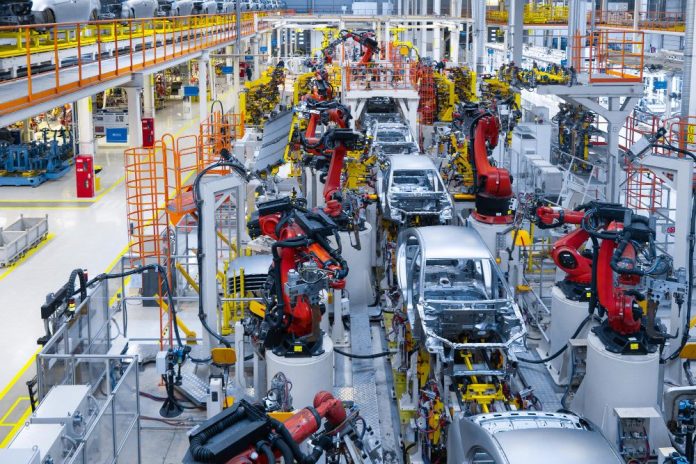
Image by usertrmk from Magnific.
Balancing Personal and Organizational Meaning in Secular Modernity
A persistent challenge in secular societies is reconciling deeply personal sources of meaning—autonomy, self-expression, creativity, and individual purpose—with the structured, efficiency-driven meaning supplied by organizational, managerial, and process-oriented systems that modernization, especially industrialization, has institutionalized.
This tension has deep historical roots. The Renaissance elevated human potential and individual agency, while the Enlightenment championed reason, liberty, and secular inquiry, shifting legitimacy from divine or traditional authority toward human-centered values. These developments laid the groundwork for the Industrial Revolution, which translated Enlightenment rationality into material systems of production. Scientific management, bureaucratic organization, and process optimization delivered unprecedented productivity and material security, yet often reduced individuals to cogs in larger machines. Work provided collective purpose through contribution to economic growth, but frequently at the cost of personal fulfillment and alienation.
In the 20th and 21st centuries, Ronald Inglehart’s modernization theory (with Christian Welzel) illuminates how rising existential security accelerated value shifts from traditional to secular-rational orientations and from survival to self-expression values. Post-war prosperity in Western societies strengthened demands for personal autonomy, meaningful work, and self-realization. Individuals increasingly seek purpose through self-chosen careers, creative expression, relationships, and personal growth rather than conformity to external structures.
Yet the Information Age has intensified the organizational side of this equation. Knowledge economies, data-driven management, agile processes, performance metrics, and algorithmic systems extend industrial logic into white-collar and digital domains. These frameworks provide coordination, scalability, and collective achievement—sources of meaning through impact and belonging to efficient systems—but can feel impersonal, surveillance-heavy, or constraining to individual expression.
The resulting challenge is one of integration: how to harness the productivity and order of organizational rationality without extinguishing the autonomy and intrinsic motivation that self-expression values require. Successful navigation appears in hybrid models—purpose-driven organizations, meaningful work design, and flexible structures—that align personal fulfillment with systemic goals. Inglehart and Welzel suggest that advanced post-industrial societies are best positioned to resolve this tension, as higher security enables both rational organization and emancipative self-expression. The ongoing task remains crafting secular frameworks where efficiency serves human flourishing rather than subordinating it.
Go to Loss of survival instincts.
References
Inglehart, R., & Welzel, C. (2005). Modernization, cultural change, and democracy: The human development sequence. Cambridge University Press.
Inglehart, R. (2018). Cultural evolution: People’s motivations are changing, and reshaping the world. Cambridge University Press.
Sennett, R. (1998). The corrosion of character: The personal consequences of work in the new capitalism. W. W. Norton.
World Values Survey. (n.d.). Findings and insights and The Inglehart-Welzel cultural map. https://www.worldvaluessurvey.org
Zuboff, S. (2019). The age of surveillance capitalism: The fight for a human future at the new frontier of power. PublicAffairs.