
Image by TravelScape from Freepik.
Western Culture: Modernization, Values and Contemporary Challenges
Values and culture form the bedrock of any society, shaping behavior, institutions, and collective destiny. This website explores the fundamental cultural values that define nations, with a particular focus on the extraordinary success and ongoing evolution of Western civilization.
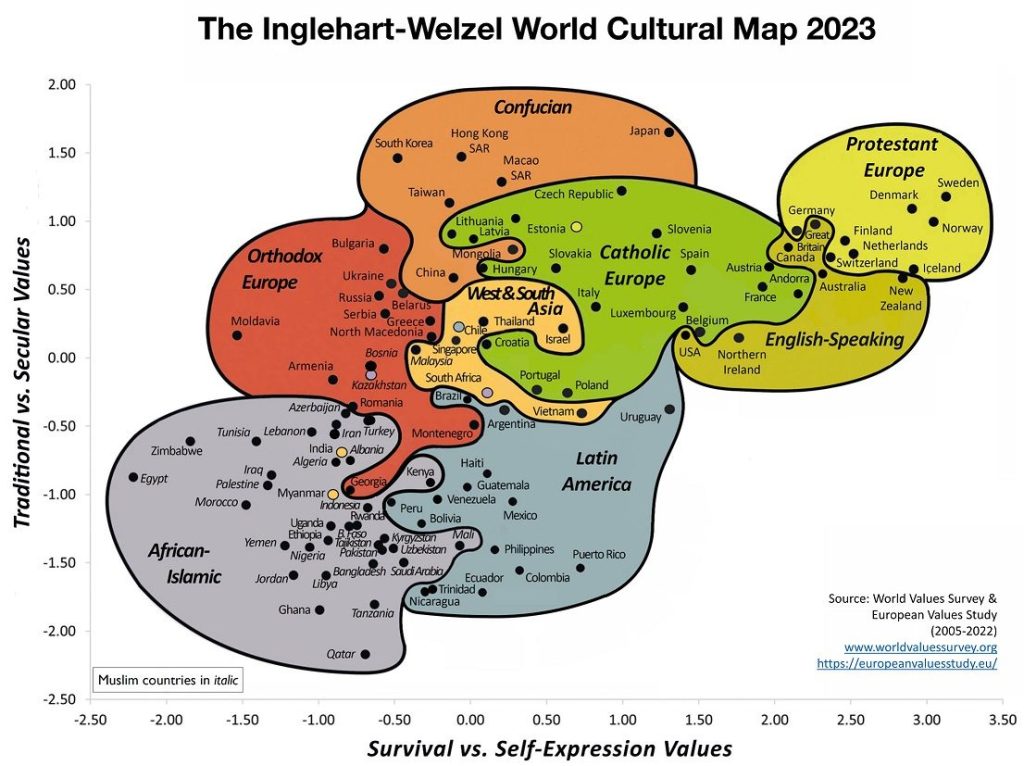
Over the past few centuries, Western culture has undergone one of history’s most remarkable transformations. From the Renaissance, which reawakened the quest for human potential, through the Enlightenment’s celebration of reason, individual rights, and scientific method, Western societies broke free from traditional and religious constraints. Industrialization then unleashed unprecedented technological progress and material prosperity, while the Information Age has accelerated knowledge dissemination and global connectivity. These shifts, analyzed through Ronald Inglehart’s theory of modernization, drove a historic transition from survival-oriented, traditional values toward secular-rational and self-expression values. As societies modernized—becoming wealthier, more educated, and secure—postmaterialist priorities like personal autonomy, tolerance, and quality of life rose to the fore.
The Inglehart–Welzel Cultural Map (2023) vividly illustrates this achievement. Western nations cluster in the upper-right quadrant, reflecting high levels of secularism, individualism, and emancipative values that have produced the world’s most prosperous, innovative, and free societies.
Yet today, Western culture faces profound challenges. Postmodern lifestyles have amplified certain traits—particularly extreme individualism—sometimes eroding social cohesion, family structures, and shared identity. Rapid immigration from more traditional, non-Western cultural spheres introduces competing value systems, creating friction and polarization visible across mainstream media and platforms like X. These dynamics test the resilience of the very openness and tolerance that define the West.
This website uses the Inglehart–Welzel framework to map national cultural positions, trace modernization’s impact on Western values, and diagnose current tensions. By understanding these patterns, we can move beyond reactive debates on where Western societies are headed, based on incidents, toward more holistic, long-term oriented and strategic responses.
In the final section, practical solutions in education and policymaking are proposed—emphasizing the confident transmission of Western heritage, the integration of newcomers around core values, and the renewal of cultural self-confidence necessary to navigate the 21st century.
The next post explains the central modernization ideas of the Inglehart-Welzel framework.
References
World Values Survey. (n.d.). Findings and insights and The Inglehart-Welzel cultural map. https://www.worldvaluessurvey.org